
Sara
•Mar 10, 2026
Raising Helpers: Building Community Action and Responsibility in Young Children
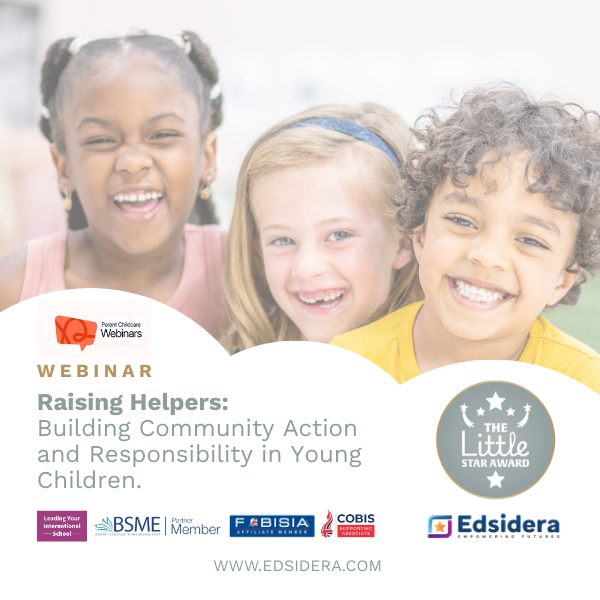
How do we nurture children who want to help, not because they are told to, but because they feel they belong?
That was the heart of our recent “Raising Helpers: Building Community Action and Responsibility in Young Children” webinar, hosted by Parent App. The session brought together parents and educators to explore how everyday moments can become powerful opportunities to build responsibility, confidence and a sense of contribution in young children.
If you missed the live session or want to revisit it, you can watch the full recording and access our free resource pack at the end of this blog.
Why do children want to help?
One of the key messages from the webinar is that children are naturally driven to belong and contribute.
Helping:
Helps children feel useful and valued
Builds confidence, independence and identity
Shapes early responsibility
Grows motivation when children feel trusted
As shared in the session, “When children help, they are learning who they are in the world.”
These early experiences matter, they lay the foundations for resilience, empathy and positive action later in life.
What helping looks like as children grow
Helping doesn’t look the same at every age, and it shouldn’t. During the webinar, we explored how helping evolves a cross early childhood:
Toddlers
Help alongside adults

Copy actions and routines
Feel included rather than independent
Preschool
Care for shared spaces
Begin taking ownership
Understand simple responsibility
Early Primary
Plan small actions
Reflect on impact
Develop empathy and initiative
Understanding this progression helps adults set realistic expectations and offer support without taking over.
Common adult traps that limit responsibility
With the best intentions, adults can sometimes accidentally get in the way of children developing responsibility.
Some common traps discussed included:
Doing tasks for children to save time
Correcting too quickly or fixing mistakes
Focusing on neatness or speed
Praising outcomes rather than effort
Small shifts like slowing down, allowing mistakes, and focusing on effort, can make a big difference.
From one-off kindness to lasting habits
Acts of kindness feel good in the moment, but lasting responsibility is built through consistency.

In the webinar, we explored how:
Repeated actions build responsibility
Habits grow through routine and reflection
Predictable helping builds confidence
Helping becomes most powerful when children:
Help → Repeat → Belong
This cycle turns everyday actions into meaningful habits rather than one-off moments.
Turning helping into simple, meaningful challenges
One of the most practical parts of the session focused on turning helping into clear, achievable challenges that children can repeat over time.
Effective helping challenges:
Are simple and realistic
Focus on effort, not perfection
Include reflection
Children were encouraged to think about:
What did I do?
Who did it help?
How did it feel?
These small reflections help children understand the impact of their actions and build intrinsic motivation.
Making helping accessible for every child
Helping should be possible for every child.
We discussed how inclusive approaches, including:
Clear expectations
Simple language
Visual prompts
Predictable routines
can remove barriers and support independence, communication and confidence.
Visual supports were highlighted as especially powerful in helping children understand routines, sequence tasks and reflect on their actions independently.
Free resources to get started today
To support families and settings in putting these ideas into action, we shared a free downloadable resource pack, including:

Helping Roles Cards
My Helping Tracker
Helping Reflection Cards
Community Action Ideas Sheet
Parent and Educator Top Tips Sheet
These resources are designed to be used at home or in educational settings and can be implemented straight away.
👉 [Download the free resource pack here]
Watch the full webinar recording

If you’d like to explore these ideas in more depth, or share them with colleagues or families, you can watch the full recorded webinar below:
🎥 [Watch the Raising Helpers webinar recording]
At Edsidera, we believe that small actions, repeated over time, build strong foundations. By creating opportunities for children to help meaningfully, we support them in growing into confident, capable and community-minded individuals.
If you’d like to explore how these ideas extend into structured, real-life learning, you can also learn more about The Little Star Award, designed to support independence, resilience and early life skills through simple, achievable challenges.